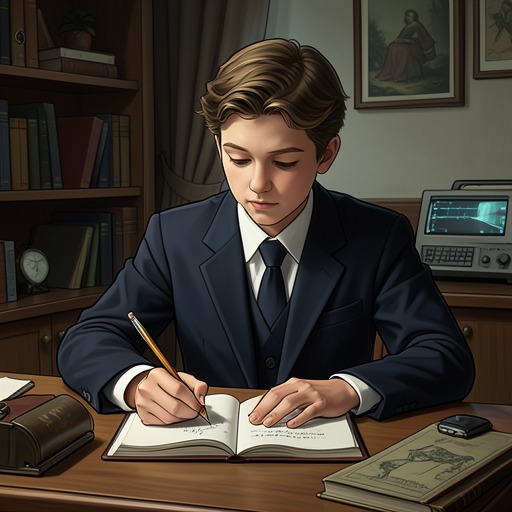
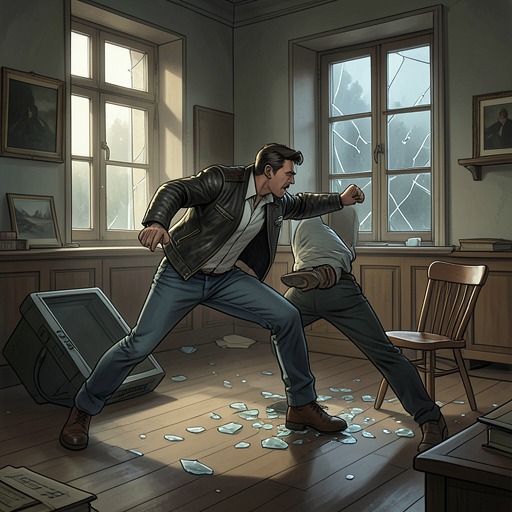
Christopher had a physical altercation with his father
The Curious Incident of the Dog in the Night-TimeChristopher’s fight with his father is a decisive rupture in their relationship: Father’s attempt to stop Christopher investigating becomes a physical confrontation, and Christopher’s response is shaped by the same distress he experienced when a policeman grabbed him. The incident ends with a gap in Christopher’s memory, his book damaged and removed, and Father withdrawing to the kitchen. Its consequences persist in Christopher’s fear that authorities might take him back to Father.
Background and Confrontation
At 5:54 p.m., Father returned to the living room and found Christopher’s book, which Christopher had left on the kitchen table while watching a video. Father quietly asked whether Christopher had spoken to Mrs. Alexander. Christopher said that he had. Father’s anger became explicit as he accused Christopher of interfering in other people’s affairs and reopening the past by talking to people he encountered. He stressed that he had asked Christopher to do just one thing, turning the discovery of the book into a confrontation over Christopher’s investigation and Father’s attempt to stop it.
Christopher tried to explain that he had not set out to investigate Mrs. Alexander; in his account, she had initiated the conversation. Father interrupted, grabbed his arm hard, and continued shouting. The contact was startling because Father had not grabbed Christopher like that before. Christopher contrasts Father’s usual levelheadedness with Mother’s quicker temper, which helps explain why this sudden loss of restraint surprised him.
The Fight and Its Immediate Aftermath
Christopher says he dislikes being grabbed and being surprised. When Father held his arm, Christopher hit him, as he had hit the policeman who lifted him to his feet at the earlier encounter. This time Father did not let go, and Christopher hit him again. The familiar trigger thus produces a more serious conflict at home: what had begun as a reaction to unwanted handling escalates while Father continues to hold him and shout.
Christopher remembers nothing for a short while. He establishes the gap by checking his watch afterward and compares the change to being switched off and on again. When his memory resumes, he is sitting on the carpet with his back against the wall; Father is standing a metre away, still holding the book, which is bent in half and damaged. Father has a scratch on his neck and a tear in the sleeve of his green-and-blue checked shirt, and he is breathing deeply. These details record the confrontation’s consequences without giving Christopher a continuous account of what happened during the missing interval.
After about a minute, Father walks into the kitchen, unlocks the back door, and goes out into the garden. Christopher hears him open the dustbin and drop something inside. Father returns without the book, locks the door, and puts the key into a small china jug shaped like a fat nun. He closes his eyes, then says he needs a drink and gets a can of beer. The sequence leaves the book’s disposal as a concrete aftermath of the fight: Father takes it out of Christopher’s hands and removes it from the house.
The Earlier Police Encounter
The fight echoes Christopher’s earlier contact with police. He likes the police because their uniforms and numbers make their roles seem clear, and he notices precise details about the two officers who arrive. But when a policeman asks questions too quickly, Christopher describes them as accumulating in his mind like loaves in a bakery-slicing machine when bread keeps arriving faster than it can be cut. The comparison gives form to an overload that makes it difficult for him to process the questioning.
When the policeman takes Christopher by the arm and lifts him to his feet, Christopher dislikes being touched and hits him. The account connects the reaction not to a general wish to attack but to unwanted contact amid mounting pressure. Later, the policeman tells Christopher that he will receive a caution: a record that he hit an officer, but that it was an accident and he did not mean to hurt him. The formal explanation recognizes the action as accidental, but it cannot prevent Christopher’s experience of being grabbed from recurring in the confrontation at home.
Continuing Fear and Significance
The encounter with Father changes what Christopher expects from his parent. Before the fight, Father’s relative calm is part of the contrast Christopher draws with Mother; after it, Christopher’s account includes a sudden, forceful grab, shouting, the damaged book, and a period he cannot remember. The scene is therefore not simply a quarrel about whether Christopher should speak to Mrs. Alexander. It makes the conflict over his investigation bodily and immediate, and leaves the book that carries that investigation physically compromised and gone.
The consequences also surface later in Christopher’s interactions with police. When a policeman suggests that they go together to a cashpoint, Christopher says he must not touch him. Later, after Christopher says he intends to live with Mother in London, the policeman suggests returning him to Father so they can discuss where he will live. Christopher becomes frightened, runs away, screams when the officer grabs him, and stops only after the officer lets go. These later reactions show that the possibility of being taken back to Father has become a source of fear, while the repeated significance of touch links the police encounter to the earlier fight at home.